
Play openings you actually like
A chess lesson from Fantasy Premier LeagueA few weeks ago, I started playing Fantasy Premier League. It’s an online game where, with a budget of £100 million, you pick English Premier League players and score points based on how they perform in that week (in the real-life match).
The good news is, it’s addictive. The bad news is, it’s addictive.
Before the first match, you can make unlimited changes to your selected 15 players. As I changed my whole line-up multiple times, doing my research on past year performances, current injuries and players I’d never heard of before, feeling my dopamine levels creep higher and higher, I realised something.
This is exactly what chessplayers go through when they’re choosing a new opening.
I started the whole thing wanting to just pick the players I like. Japanese players like Suzuki and Maeda. Maybe an Australian player, Herrington. And then, players I just feel will kill it this season, like Elanga.
But...picking them wasn’t going to win me the FPL, played by over 10 million people around the world. I need to pick the best players and optimal line-up, not ones I like and feel will do well!
So in the end I picked a line-up that included some of the biggest names and most popular picks, even some players I’d never heard of.
And therein lay the trap...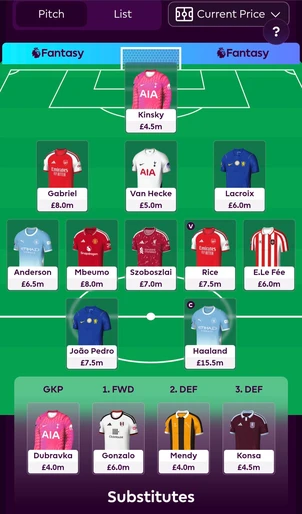
For example, in my final Gameweek 1 line-up I had Mbeumo, a French/Cameroonian attacker. He’s good, and seems like a cool guy. But am I a fan of Manchester United, or believe in them this season? No and no.
So... why did I pick him? He’s a consistent performer, a very popular pick, and it seemed useful to have a Man United player in my line-up in case they do well.
The thing with these picks is, if they do well, you’re happy. But if they do badly, you’re left with this peculiar feeling. Why did I even pick him?
Things would be different with a player you genuinely like and support. If they do well you’re super happy, and if they do badly, well, at least you know why you’re supporting them and can suffer together.
It’s just like that with chess openings.
When we start chess, we don’t really care what we play. Do you remember why you played some of the openings you played, years ago? No, we just play, the opening doesn’t matter.
But at some point, the long-reaching tentacles of opening videos, opening books, Chessable courses and Modern Chess databases can lock on to you, like Sauron’s eye.
“Your...precious...opening repertoire...is this one...*mysterious whispers emanating from website*”
Whatever your real issues are in your chess, opening courses and changing openings have that promise of a fresh start, where your potential will magically be unlocked.
Maybe I’m just not playing the right opening...if I can get a good enough position out of the opening, I’m definitely better than others at my level...why don’t I prep super-deep and beat people in the opening? Hmm...why bother doing the hard calculation exercises and improve my decision-making process if I can just...get an advantage in the opening instead? I just need to memorise more lines!
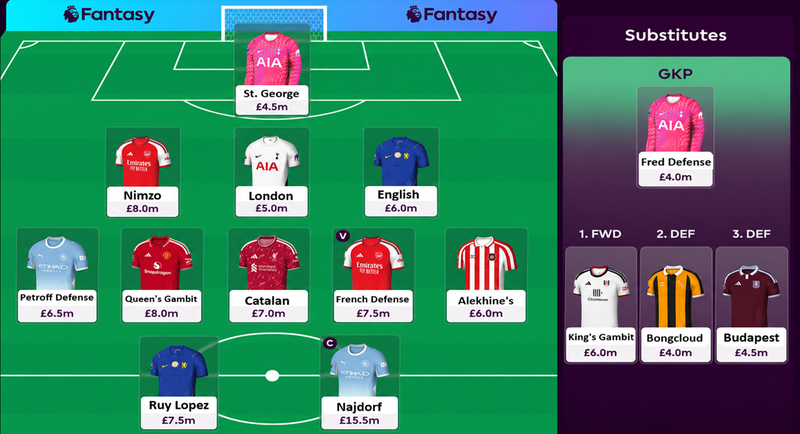
After 20 years of disliking openings, in 2021 I found Ch____ble (REDACTED), then Mo____ Chess in 2022 and got addicted to opening courses for a while, I bought so many (I shan’t tell you the number). So I know what it feels like. And yes, opening courses can be a useful resource in deepening a repertoire if you stick with it. Just don’t follow it blindly, question why every move has been recommended.
But they don’t make you play better chess.
Like the Sicilian Najdorf, or the London System, or the Queen’s Gambit Exchange Variation: all super popular. And strong. But from beginners all the way up to grandmasters, it honestly doesn’t really matter what you play (within the bounds of playableness), there is no perfect opening.
Try gambits and aggressive openings. Try solid ones. Try main lines and sidelines. Over time, a bit like with life, by experiencing and experimenting with all of them you know yourself better, find what you like and want to play. Don’t you think it would be boring to play openings because everyone’s playing them, or because they’re objectively strongest?
Why pick the Najdorf out of so many Sicilians? Why play the London or Jobava London when you’ll get to experience so many more different types of games and structures if you play 1.d4 and 2.c4 instead? Why exchange on d5 after 1.d4 d5 2.c4 e6 3.Nc3 Nf6 when moves like 4.Bg5 or 4.Nf3 are more open-ended, and don’t free Black’s light-squared bishop immediately?
Choosing those variations isn’t wrong. There is no right or wrong option. But after being pulled into such openings (admittedly, by my own free will), I later thought, “why am I even playing this?”.
And I realised that if it were up to me purely based on what I want to play, I wouldn’t have dabbled with the Najdorf, Jobava London or Exchange QGD.
Chess is a lot more fun when you play moves you’re genuinely curious about, that excite you, that other people might tell you not to but somehow the variation attracts you. Life is too short to outsource how we play, right from the first moves, to just play what’s popular or because it ‘scores best statistically/is objectively best’. Sure, if you’re a beast in opening theory with the corresponding chess skills for your playing level, you can get a lot from good openings.
But look back at your own chess in the last few months.
Is the opening stage really where things are decided?
So take the time, from move 1, to think about what kind of chess you want to play, and take stock of whether your current repertoire fits that.
Sure, sometimes your choices might not work out, and you don't want to play something that makes you immediately suffer if they find the strongest replies. But you’ll learn a lot more by following your own path.
You may find yourself adopting a style you find particularly exciting, and there’s nothing wrong with that. [...] This sort of stylistic blending is a necessary part of developing one’s own style, but it doesn’t occur in a vacuum. You have to read widely, constantly refining (and redefining) your own work as you do.
—Stephen King, On Writing
If you want to take a step back and look at how you're working on chess now (including openings), what's working well and what could be improved, I wrote a free ebook, The Chess Improvement Reset. If you've been feeling stuck or want to try some guided exercises to take stock of your chess and day-to-day routine, feel free to check it out.
P.S. If you're in FPL, feel free to join this one for chessplayers, code 1qxnj1, or invite me to yours 😉
You may also like
 IM theScot
Life Hacks for Getting to IM
A post about the life-skills that help you in chess. IM datajunkie
Why most game reviews don't make you better
And what to do instead Mcie
Calculate until the end.. and one move more!
Blunder or brilliancy, sometimes it all hinges on one more move. IM datajunkie
What most improvers are missing (a new GM explains)
Interview Part 2/2: how Rishi Sardana got from 1800 to IM, and advice for improvers IM datajunkie
Our 64 most memorable moves
Share a move you'll never forget for our community chess collection NM ZugAddict