
Stop wasting your time: A rant about openings.
Often when I begin working with chess students, they make the same opening mistakes again and again. Here is why, and how to prevent it.In this blog post I will be discussing one of the biggest opening mistakes that I see players making (often juniors, often older). I will also be briefly discussing my history with this mistake.
In 2022 I saw a chess tournament coming up soon in the city I lived in, I thought this seemed quite interesting. I had always found chess very cool, but I really had no idea of how to play at a competitive level. So I decided to practice chess, I made an account on a chess website, played a chess game, and went for the trusty attack that my uncle taught me many years ago where I would bring out my queen and my bishop to try and win fast — the 4 move checkmate — of course my opponent didn't fall for it, and eventually I lost. Clearly, I needed a better opening than the 4 move checkmate. So I went to Youtube and I tried to find a chess opening I could play. And I imagine I found 1 of the 10000 videos on Youtube titled something along the lines of "Crush your opponent in 6 moves with the X Y opening". So I learnt that opening, and I thought I was making pretty good progress! Awesome!
So for a while I would play this opening and I would get a few good positions out of it! Nice. Unfortunately my opponents would often play moves I wasn't prepared for. After about a month or so of improving, and crossing the 1000 rating threshold on that website, I started to struggle to gain rating. I still wanted to improve. I was doing my openings just like the Youtuber taught me, I was practicing my tactics, but I had stopped gaining rating. Often I was reaching quite even positions, and still being out of opening preparation, and unfortunately the Youtube video didn't have more moves for me to memorise! Plus, it was getting hard to test how well I was actually memorising these openings. So I created an account on Chessable, they promised me that they could help me memorise my openings more. Perfect! I instantly noticed improvement. You may be wondering how I knew I was improving, it was quite simple really, I was memorising more moves! It got to the point that eventually I started making lots of chess studies about openings (they were all private of course, as were the accounts I was playing on, else someone find my games and prepare to play me in which case I must have a 0% chance of winning, since chess is all about openings).
Eventually in an over the board tournament I got to play a game against a chess master. I was so excited. We started and I was white, they played an open Sicilian and I felt pretty happy! From there we played 12 moves of Sveshnikov theory. Nice! Clearly things were paying off. Unfortunately on my first move out of theory I blundered a pawn.
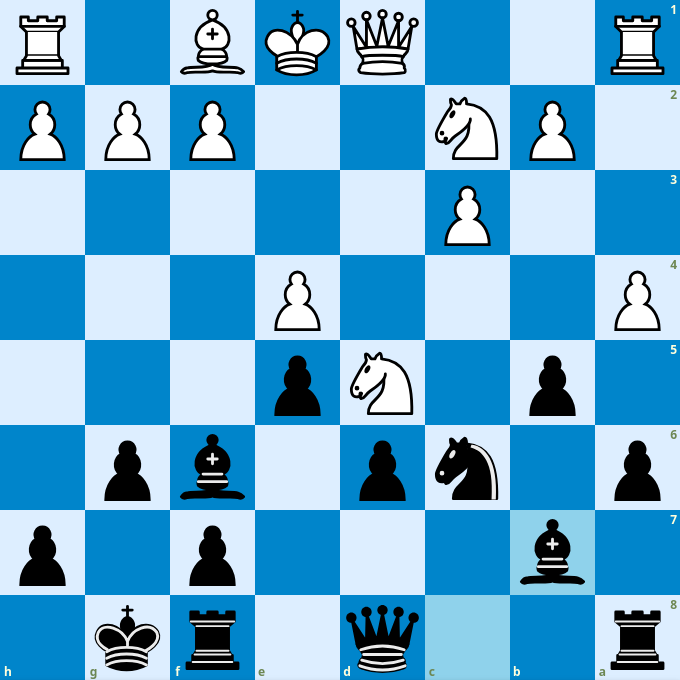 Oops! And then 3 moves later...
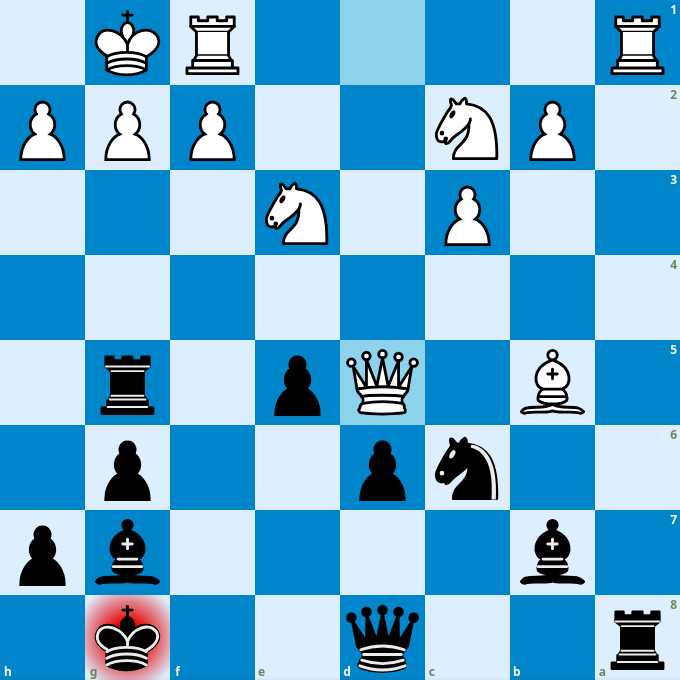 There goes my Knight! Here I chose to resign.
So after this game what did I learn from it? Truth be told, I think I was foolish enough to think "wow I just stayed in opening theory against a master for 12 moves. I am doing great!". I don't think it was for another 6 months, after reaching a rating of 2000 on another chess site, when I got a chess coach that I finally started being sensible about openings.
Another mistake I often see with openings, and the reason I decided to write this blog post, is treating a chess game like preparations for the big family Christmas gathering. You make a large sugar cookie sheet, pull out some christmas tree, and ginger bread man shaped cookie cutters, and you make lots of cookies. It is a great way to save time and reduce the amount of effort. For some reason a lot of chess players seem to treat chess openings the same way.
To give an example of this, here is a position from a 60+30 game I played against one of Hobart's strongest juniors in the Hobart Chess Championships a few months ago.
1. c4 c5 2. Nc3 Nc6 3. g3 g6 4. Bg2 Bg7 5. e3 e5 6. Nge2 Nge7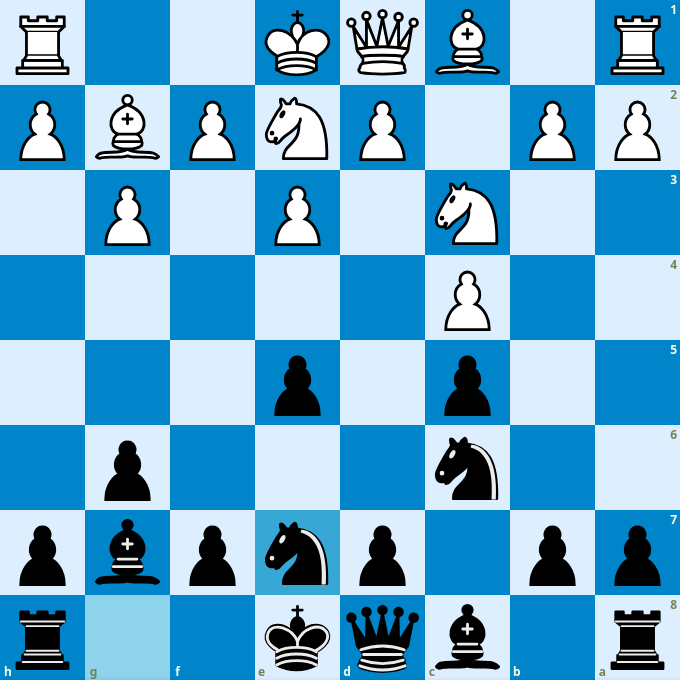 My opponent has been playing the English for a long time, and usually in their games they will play for the d4 square. It is a good plan which seems to work most of the time, and cuts down on the amount of opening to learn! It seems to be the perfect cookie cutter plan. c4, and then eventually d4. Unfortunately for them I have decided to put up a bit more of a fight for the d4 square with c5 and e5, and keep the position a bit more closed. I imagine in this position my opponent was taking a look at their cookie cutter opening plan and try and find a way to make it fit this position, unfortunately the cookie cutter doesn't fit. You need to go for a different plan. Opening principles tell us that castling is generally a good idea, so maybe we could go for that, and then try and find some weakness in my position (what about that d5 square, or maybe going for a Queenside attack?). Unfortunately for my opponent they couldn't put the cookie cutter down and instead played Nb5. What followed was a quite interesting tactical battle, but one that white was ultimately losing (in part because their king never got castled). Here is the full game. 1. c4 c5 2. Nc3 Nc6 3. g3 g6 4. Bg2 Bg7 5. e3 e5 6. Nge2 Nge7 7. Nb5 d6 8. d4 exd4 9. exd4 a6 10. d5 Ne5 11. Nbc3 O-O 12. b3 Bg4 13. Bb2 Nf3+ 14. Bxf3 Bxf3 15. O-O g5 16. Qd2 Ng6 17. h3 Qd7 18. Kh2 Rfe8 19. Rfe1 Re5 20. Ng1 g4 21. Nxf3 gxf3 22. Nd1 Rh5 23. h4 Nxh4
Unfortunately, this is not the only time I have seen a junior do this against me. Recently I decided for the first time in a long time to start trying to get good at chess again, and decided to play against a rather strong junior I have worked with previously. When analysing this game a few hours ago I came upon a unique position and that is what actually started this whole blog post. Here is the game.
1. c4 Nf6 2. Nc3 g6 3. g3 Bg7 4. Bg2 O-O 5. e4 d6 6. Nge2 Nc6 7. O-O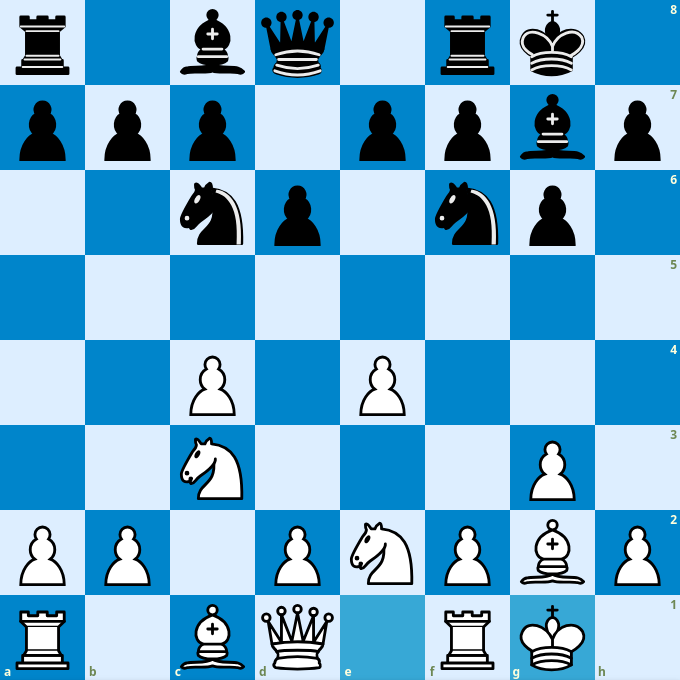 Here we see a similar opening (matter of fact, white has played the exact same moves as they did in the previous game, but as white)! This came from an English and after the game I asked my opponent what he was thinking in this position and he said "I haven't seen e4 in the English before, so I was struggling to figure out how to attack d5". We can see that my opponent made the same mistake here, they had this cookie cutter method for playing against the English, and they failed to identify that they should be treating this differently to openings where they can apply their usual d5 plans. They ended up playing Be6, completely giving up on ideas like e5. Interestingly enough, if I asked a player who had never seen the English opening what they would play here, I would imagine they would say e5. This cookie cutter clearly seems to be a hindrance here. Ultimately this game ended up going far far away from the opening, if you would like to see it then it can be viewed here. https://lichess.org/GobdEU29
So what can be learnt from this blog post? Simply put, put down your cookie cutters and just keep your opening principles in mind! For most of my students that is all they need to improve, they don't need to be memorising the opening moves or anything like that, simple principles work just fine, beyond that practice your middle-games and endgames! And most importantly, analyse your games! Don't be lazy like me and spend 2 hours writing a blog post about a pet peeve of yours just to avoid game analysis.
You may also like
 RuyLopez1000
The Secret History of Chess Engines
"It doesn’t mean Kasparov isn’t a deep thinker, just that you can bypass deep thinking in playing ch… TheCommandalorian
Road to NM -- Week 14: 1600!!!
Welcome back to week 14 on the Road to NM series where I account my progress on the road towards the… RuyLopez1000
Bronstein vs Botvinnik: The Rivalry
Explore one of the Greatest Rivalries in the History of Chess CM HGabor